Case Study
ILI on Heavy Wall Subsea Pipeline
Pipeline Description:
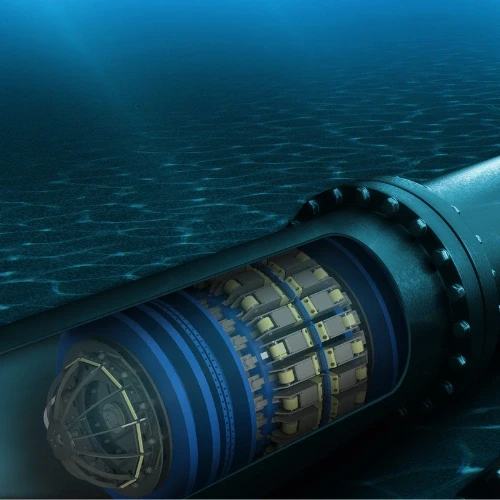
Two 18″ looped offshore North Sea wet gas flowlines need to be inspected. The total length is 286Km with up to 27.3mm nominal wall thickness. Potential corrosion had been detected in a previous 3rd party in-line inspection; however, the POI was limited and no clear differentiation between corrosion and debris was possible. Hence, the previous inspections were not fully successful, and the data couldn’t be used for a full evaluation of the client’s problems. Consequently, the maximum allowable operational pressure (MAOP) was reduced, clearly affecting the client’s production.
Why is it challenging?
There were many challenging factors like length, wall thickness, urgency, debris history, combination of different sensor technologies, etc.
Target of the inspection:
Our goal was to perform a custom-made cleaning program to remove the debris prior to the ILI run then perform a high-resolution inspection for internal and external metal loss.
Request Download
Enter your contact information and we will send you the requested file soon.